Technology

Next Gen Display Tech Breakthroughs

Por Otton Vonder•October 9, 2026
Publicidad

Micro LED optics and glass substrates are quietly rewriting how screens and chips talk to each other.

When Light Becomes the Wire

Picture a data cable so thin it's made of light itself, threading information between chips at speeds copper could never dream of. That's essentially what Micro LED optical interconnects promise. Instead of shuttling electrons through metal traces that heat up and bottleneck under pressure, engineers are now routing photons directly between processors and displays. It sounds like science fiction, but the prototypes already humming in labs from Seoul to Santa Clara suggest otherwise.

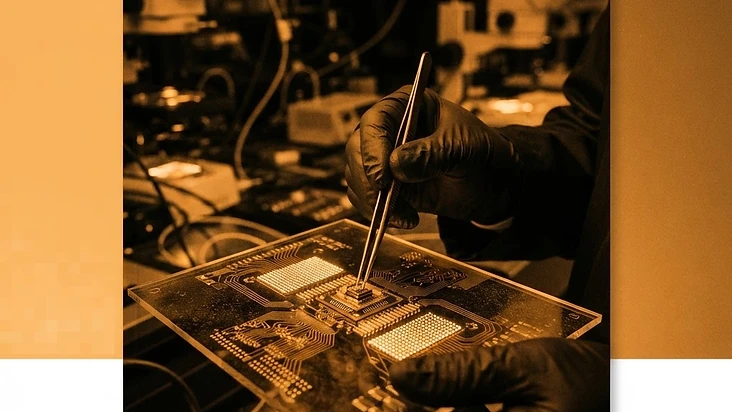
Samsung and LG have both poured years of research into Micro LED, originally chasing brighter, more efficient televisions. But something interesting happened along the way: the same microscopic diodes capable of rendering a sunset in a living room are now being repurposed as ultra-fast optical switches. Each LED, smaller than a grain of pollen, can flicker on and off billions of times per second, encoding data as pulses of light rather than voltage swings. The result? Interconnects that sip power while moving information at speeds that make today's fastest USB connections look like dial-up.

Perspectiva Patrocinada

Then there's the other half of this quiet revolution: TGV glass substrates — glass with vias, tiny holes drilled through it, so data signals can pass vertically between stacked chip layers. Silicon has been the default substrate for decades, but glass is stiffer, flatter, and surprisingly better at handling heat distortion at the scale modern chips demand. Corning, long synonymous with Gorilla Glass on smartphones, has been developing glass-core substrates aimed squarely at this next wave of high-density computing.

Glass was never just about protecting a screen — it's becoming the backbone of how information moves inside the machine.

Why does any of this matter beyond a lab bench? Because the demands of artificial intelligence, immersive AR headsets, and cloud infrastructure are colliding with the physical limits of copper and silicon. TSMC, which manufactures chips for nearly every major tech brand on the planet, has acknowledged that advanced packaging — including glass substrates — is now as critical to performance gains as the transistors themselves. The bottleneck of modern computing has shifted from how small we can make a chip to how fast we can let it talk to everything around it.

There's a sensory dimension too, one easy to overlook. Micro LED panels built on these optical principles don't just transmit data faster; they render images with a crispness and contrast that makes OLED, impressive as it still is, look almost muted by comparison. Walk past a Micro LED display at a trade show and the colors seem to hover slightly above the glass, like light refusing to stay flat.

The Shape of What's Coming

None of this arrives overnight — manufacturing glass substrates at scale remains notoriously tricky, and yields are still being refined. But the trajectory is unmistakable. Within a few product cycles, the screens we touch and the servers we never see may share the same underlying language of light and glass, finally letting data move as quickly as the ideas it's meant to carry.

Marcas mencionadas
SamsungLGCorningTSMC
Publicidad

Disclaimer

This content is purely informative and educational. TRENDSFAMA is not a journalistic or sports institution, does not sell courses, methods, or any info-products, does not enroll students, and has no affiliation, sponsorship, or representation of the schools, universities, manufacturers, and companies mentioned throughout the text. The brands mentioned belong to their respective owners.

Values, course loads, requirements, free conditions, and salary ranges are market estimates collected from public sources and may vary according to region, institution, date, and availability. Always confirm the information directly with the manufacturers or producers mentioned.

No information published here constitutes a promise of employment, income guarantee, or financial, investment, or professional recommendation. Decisions made based on this content are the sole responsibility of the reader. If you reached this page through an advertisement, please note that this is free informative content, with no linked sales offer.